
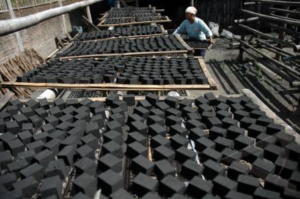
Coconut charcoal briquette Indonesia – Coconut charcoal briquettes have become a popular and sustainable fuel source in Indonesia. As the demand for renewable and eco-friendly energy continues to grow, it is essential to consider ways to improve the production and use of coconut charcoal briquettes in the country. In this article, we will explore some recommendations for the future of coconut charcoal briquettes in Indonesia.
- Increase the adoption of sustainable production practices.
While coconut charcoal briquettes are a sustainable alternative to traditional charcoal, the production process can still have negative environmental impacts. Producers should adopt sustainable practices such as using only waste materials and ensuring that the production process is energy-efficient to mitigate these impacts. This will help reduce the production process’s carbon footprint and ensure that coconut charcoal briquettes remain a sustainable energy source. - Improve quality control standards.
One of the critical challenges facing the coconut charcoal briquette industry in Indonesia is the inconsistency in quality. Implementing quality control measures throughout the production process is essential to build consumer confidence and ensure that the product meets specific standards. This includes testing the raw materials, monitoring the production process, and conducting quality assurance checks on the final product. - Invest in research and development.
There is still much to learn about the production and use of coconut charcoal briquettes. Investing in research and development can improve the production process’s efficiency and effectiveness and identify new product applications. This could include exploring new ways to use coconut charcoal briquettes, such as in industrial processes or as a component in other products. - Promote consumer awareness and education.
Many consumers still need to learn about coconut charcoal briquettes’ benefits or how to use them effectively. Promoting consumer awareness and education through marketing campaigns, workshops, and other outreach initiatives is essential to address this. This can help build demand for the product and ensure consumers use it safely and efficiently. - Create a supportive regulatory environment.
Finally, policymakers and regulators should work to create a supportive environment for the coconut charcoal briquette industry. This includes providing incentives for producers to adopt sustainable practices and ensuring that the product meets specific standards for quality and safety. A supportive regulatory environment can foster innovation and growth in the industry while ensuring that the product remains sustainable and safe for consumers.
In conclusion, the future of coconut charcoal briquette Indonesia looks bright, but there is still work to be done to ensure that the industry continues to grow and thrive. By adopting sustainable production practices, improving quality control standards, investing in research and development, promoting consumer awareness and education, and creating a supportive regulatory environment, we can ensure that coconut charcoal briquettes remain a valuable and sustainable source of energy for years to come.
Maybe you like to read the following article Strengthen Soil Pathway using Coir Geotextiles in Roads